Personatges
In this section, created in collaboration with Chambra D’òc, we introduce the guests of the Maison des Lengas, each with their own story, roots, and life paths.
What unites them is their decision to become spokespersons for the Maison des Lengas initiative in Ostana and to offer a glimpse into what they do.
In fact, during their residency, all the featured artists in the “Personatges” column dedicated some of their time to sharing their journeys with the people of Ostana and the general public: through live webcasts or in-person events, they presented their work. Those who create express themselves. Those with a story sing it, act it out, and share it.
All content is available on the Maison des Lengas social media channels, accessible via the links in the descriptions below.
Oliviero Vendraminetto
Oliviero Vendraminetto
“My name is Oliviero Vendraminetto. I was born in Belgium, in the Flemish region, to Italian immigrants. I spent most of my childhood in Turin, moving back and forth between Italy and Belgium, before eventually settling in France, where I have lived for almost 50 years. Languages have always fascinated me, and lately I’ve been discovering Occitan, the language of the place where I live.”
Elcke Rotscheid
Elcke Rotscheid
“My name is Elcke Rotscheid. I was born in the Netherlands but grew up in southern France, in Quercy, a region where Occitan is spoken.
I immediately took a liking to the local dialect, which, as I later realized, is the Occitan spoken as far south as Italy. I began learning to play the flutes and the accordion with the ‘Association for Traditional and Folk Music of Quercy.’”
My name is Oliviero Vendraminetto, 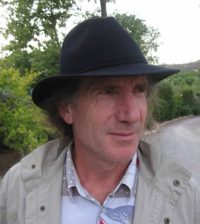 I was born in Belgium, in the Flemish region, the son of Italian immigrants. I spent much of my childhood in Turin, moving back and forth between Italy and Belgium, before eventually settling in France, where I’ve lived for nearly 50 years. Languages have always fascinated me, and lately I’ve been discovering Occitan, the language of the place where I live.
After years of manual labor, I returned to theater studies later in life, and I’ve now been involved in theater for about 35 years, both as an actor and a director; but my main artistic pursuit today is storytelling, which I practice and teach in French, Italian, and perhaps one day in Occitan and Dutch.
Thanks to Elcke, a musician friend of mine who often accompanies me at storytelling performances, I learned about the Ostana Prize and met the staff who organize it. For the past few years, I’ve been involved in this wonderful linguistic adventure as a mentor and guide for the prize winners, who are primarily from Africa.
That’s how I ended up at the “Maison des Lengas” in Ostana, a venue dedicated to showcasing artists from various fields.
I believe that the “Maison des Lengas,” situated in a paradise-like setting, has the potential to welcome and introduce people to fascinating individuals and activities; personally, it strikes me as an interesting experience, which is why I gladly agreed to participate.
My name is Elcke Rotscheid, 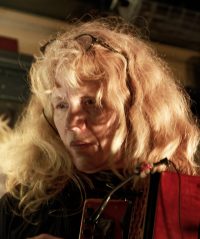 I was born in the Netherlands but grew up in southern France, in Quercy, a region where Occitan is spoken.
I immediately took a liking to the local dialect, which, as I later learned, is Occitan, spoken as far north as here in Italy.
I began learning to play the flutes and the accordion with “the Association for Traditional and Folk Music of Quercy.” Before long, I was playing to accompany dancing, but I also started accompanying a storyteller with whom we’ve toured all over France for 30 years and still do today.
Traditional and folk music are perfect for creating diverse and varied atmospheres, especially now that my repertoire has expanded to include Nordic, Romanian, Italian, and other pieces…
I’ve also toured extensively with a “fanfare” group playing street music—always folk-based—familiarizing myself with other musical styles (Latin American, jazz…)
During my first trip to Italy, 15 years ago, I had a “magical” encounter with the Balacaval caravan, which traveled through the valleys with horses and music very similar to what I played. We hit it off immediately, and a collaboration began with them and with the Chambra d’òc.
This introduced me to the “Ostana Prize,” and given my passion for languages—especially native languages—I immediately felt at home.
The idea of a residency at the “Maison des lengas” with storyteller Oliviero Vendraminetto, with whom we’ve been working for a few years now, seems like a wonderful opportunity to develop our activities and share with you what we’re trying to do.